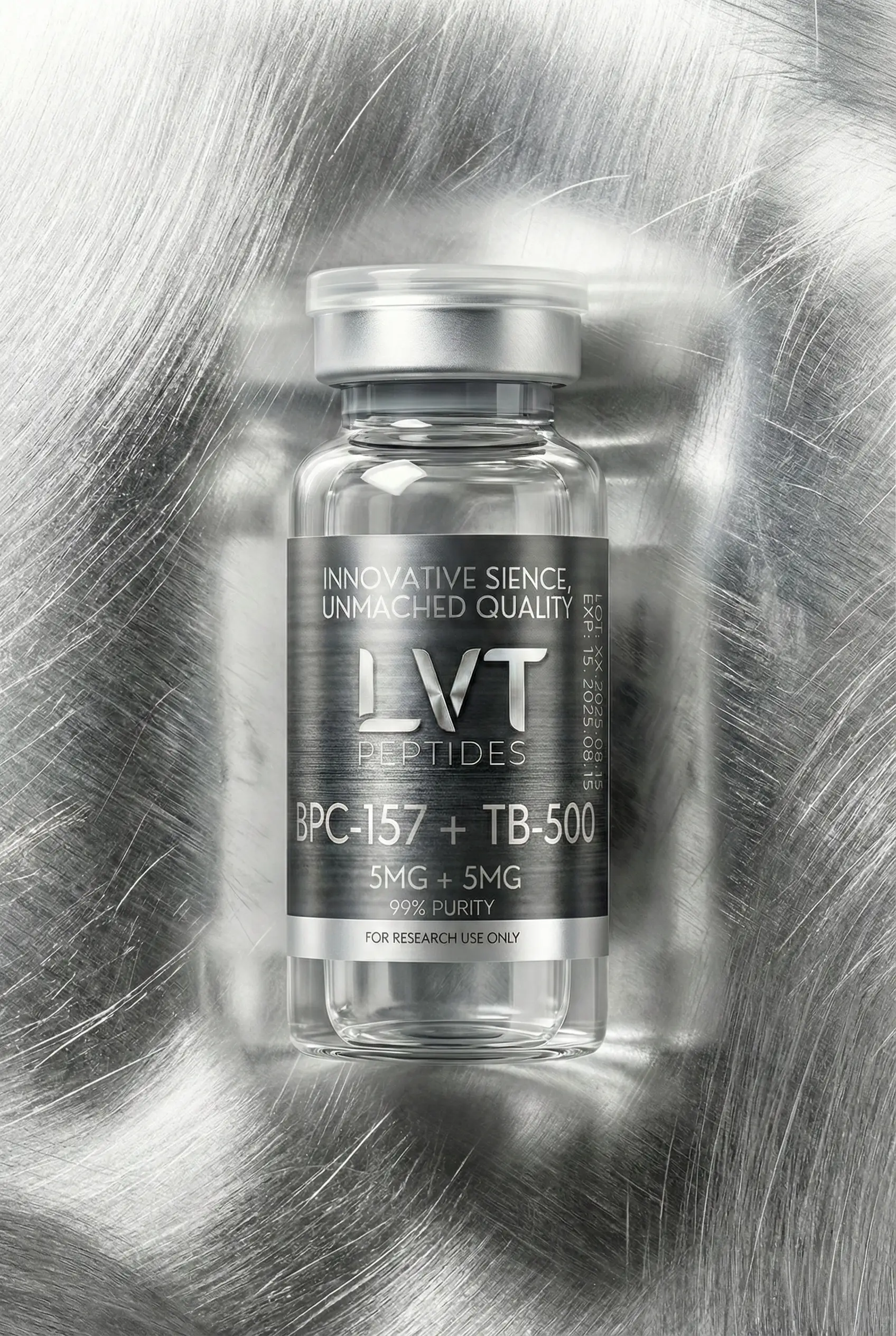
Description
BPC-157 & TB-500 – Targeted Repair & Systemic Regeneration
| Attribute | Details |
|---|---|
| CAS # | BPC-157: 137525-51-0; TB-500: 77591-33-4 |
| Molecular Formula | BPC-157: C62H98N16O22; TB-500: C212H350N56O78S |
| Sequence (AA) | BPC-157: GEPPPGKPADDAGLV; TB-500: Ac-SDKPDMAEIEKFDKSKLKKTETQEKNPLPSKETIEQEKQAGES |
| Molecular Weight | BPC-157: ~1419 g/mol; TB-500: ~4963 g/mol |
| PubChem CID | BPC-157: 9941957; TB-500: 16132327 |
| Half-Life | BPC-157: ~4 – 6 hours; TB-500: ~8 – 12 hours |
| Synonyms | Thymosin Beta-4 Fragment, Body Protection Compound-157, Pentadecapeptide BPC-157 |
| Type | Peptide Blend |
| Focus | Recovery & Performance |
Description
BPC-157 (Body Protection Compound-157) is a gastric-derived pentadecapeptide shown in preclinical studies to accelerate the healing of tendons, ligaments, muscles, and intestinal tissues. It modulates growth factor expression and enhances fibroblast migration to injury sites. TB-500 (Thymosin Beta-4 fragment) complements these effects by promoting actin up-regulation, angiogenesis, and cell migration, facilitating faster tissue remodeling and improved microcirculation. When combined, the two peptides demonstrate a dual-mechanism synergy: BPC-157 supports local tissue regeneration and anti-inflammatory balance, while TB-500 enhances cellular motility and vascular repair, together amplifying regenerative outcomes beyond either peptide alone.
Mechanism of Action
BPC-157 has been observed to increase VEGF signaling, fibroblast migration, and modulate nitric oxide pathways for improved tissue perfusion. TB-500 stimulates cell migration through actin-binding, promoting regrowth and repair of injured or inflamed tissues. Their combined use in research demonstrates cytoskeletal and angiogenic synergy – ideal for complex tissue restoration.
Benefits
Synergistic Acceleration of Tissue Repair
The combination of BPC-157 and TB-500 has been studied for its synergistic ability to accelerate the repair of muscle, tendon, and ligament injuries. BPC-157 enhances angiogenesis and fibroblast activation, while TB-500 promotes actin polymerization and cell migration. Together, they support faster restoration of tissue integrity and biomechanical strength, making this pairing a gold standard in regenerative research models.
Enhanced Angiogenesis and Blood Flow Restoration
Both peptides are observed to promote angiogenesis, increasing the formation of new capillaries in injured regions. TB-500 upregulates VEGF and actin-binding proteins, whereas BPC-157 improves endothelial repair and vascular stability. Their combination ensures optimal oxygen and nutrient delivery, significantly improving tissue recovery time and quality.
Reduction of Inflammation and Oxidative Stress
BPC-157 and TB-500 work synergistically to reduce inflammatory cytokines such as TNF-α and IL-6 and to mitigate oxidative stress markers in damaged tissues. This dual anti-inflammatory action protects cellular structures from degradation and supports homeostatic recovery after trauma, surgery, or repetitive strain injuries.
Promotion of Muscle Regeneration and Performance Recovery
Studies suggest that the combination enhances myoblast differentiation and muscle fiber regeneration following trauma or exercise-induced injury. TB-500’s role in cellular migration complements BPC-157’s capacity for angiogenic and collagen-based repair, together facilitating faster muscular restoration, improved endurance, and reduced post-exertional fatigue in experimental recovery models.
Improved Collagen Synthesis and Structural Integrity
BPC-157 stimulates collagen fiber synthesis and fibroblast activation, while TB-500 promotes cellular alignment and remodeling of the extracellular matrix. The result is a denser, more organized tissue structure that exhibits higher tensile strength and better resistance to re-injury. This makes the combination particularly interesting for tendon and ligament regeneration studies.
Acceleration of Joint and Connective Tissue Healing
Research indicates that both peptides support cartilage and synovial tissue repair. BPC-157 has shown protection against degenerative joint changes, while TB-500 improves cell migration and reduces fibrosis. Their joint use enhances chondrocyte viability and promotes a more stable joint microenvironment conducive to long-term recovery.
Neuroprotective and Peripheral Nerve Recovery Effects
The BPC-157 & TB-500 stack demonstrates neuroprotective potential by improving axonal regeneration and neuromuscular coordination following peripheral nerve injuries. BPC-157 contributes to neurotrophic signaling and dopamine regulation, while TB-500 enhances actin-based neuronal outgrowth, resulting in faster restoration of nerve conduction and motor function.
Enhanced Wound Healing and Skin Regeneration
Experimental models show that the combination accelerates cutaneous wound closure through coordinated angiogenesis, epithelialization, and fibroblast proliferation. The result is improved wound stability, reduced scar formation, and stronger tissue remodeling, supporting its exploration in both trauma and cosmetic regenerative research.
Support for Organ and Vascular Protection
BPC-157 has shown protective effects on liver, heart, and gastrointestinal tissues, while TB-500 improves endothelial cell repair and reduces ischemic injury. Together, they provide systemic protective effects across multiple organs, maintaining vascular integrity and reducing reperfusion-related oxidative damage in experimental ischemia models.
Synergy in Cytoskeletal and Cellular Migration Mechanisms
At the cellular level, TB-500 enhances actin polymerization and cell motility, while BPC-157 stabilizes the extracellular matrix and promotes fibroblast adhesion. This mechanistic complementarity leads to a more efficient wound healing cascade, facilitating rapid closure and organized tissue reconstruction under experimental conditions.
Potential for Combined Regenerative Protocols
The BPC-157 & TB-500 combination is frequently studied as a core regenerative stack in synergy with GHK-Cu or SS-31 for mitochondrial and collagen support. This approach is used to explore multi-pathway recovery involving angiogenesis, oxidative stress reduction, and cellular energy optimization across complex injury and aging models.
Peptide Interactions (Stack Suggestions)
| Peptide | Interaction | Description |
|---|---|---|
| GHK-Cu | Synergistic | Mechanistic rationale: BPC-157 + GHK-Cu → fibroblast activation + collagen signaling for enhanced tissue repair. |
| SS-31 | Synergistic | Mechanistic rationale: TB-500 + SS-31 → vascular protection + mitochondrial resilience. |
| Epitalon | Synergistic | Provides enhanced cellular repair and long-term DNA protection in combination with the regenerative properties of the blend. |
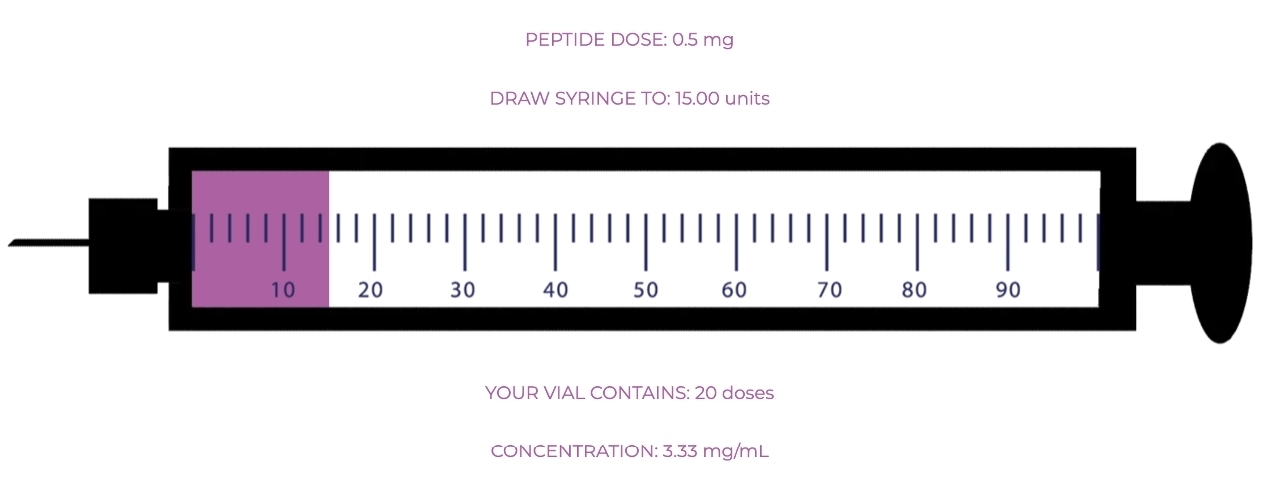
Dosing & Reconstitution Guide
| Parameter | Details (BPC-157 + TB-500 5 + 5 mg) |
|---|---|
| Volume | Add 3.0 mL bacteriostatic water |
| Concentration | 3.33 mg/mL |
| Dose | 0.5 – 2.0 mg total blend once daily |
| Cycle Length | 8–12 weeks; optional extension to 16 weeks. |
Dosage & Protocols Variations
Standard Protocol
Dose: 0.5 – 1 mg
Duration: 4 – 6 weeks
Frequency: 1× daily
Cycle Interval: 4 week rest
Goal / Description: Basic tissue recovery support model
Enhanced Regeneration Protocol
Dose: 1 – 1.5 mg
Duration: 8 – 12 weeks
Frequency: Every other day
Cycle Interval: 4 week rest
Goal / Description: Designed for extended regenerative studies, emphasizing vascular and muscular adaptation
Post-Load Model
Dose: 2 mg
Duration: 2 – 4 weeks
Frequency: 1× daily
Cycle Interval: 2 week rest
Goal / Description: Applied in post-strain or high-load experimental recovery
Biohacker Protocol
Dose: 0.5 mg
Duration: Continuous
Frequency: 5× weekly
Cycle Interval: 2 week rest
Goal / Description: Experimental long-term maintenance design emphasizing consistent angiogenic response
Storage Instructions
Proper storage preserves peptide quality and stability.
- Lyophilized: Store at −20 °C in dry, dark conditions; minimize moisture exposure.
- Reconstituted: Refrigerate at 2–8 °C; use within 4–6 weeks; avoid freeze–thaw.
- Allow vials to reach room temperature before opening to reduce condensation uptake.