Description
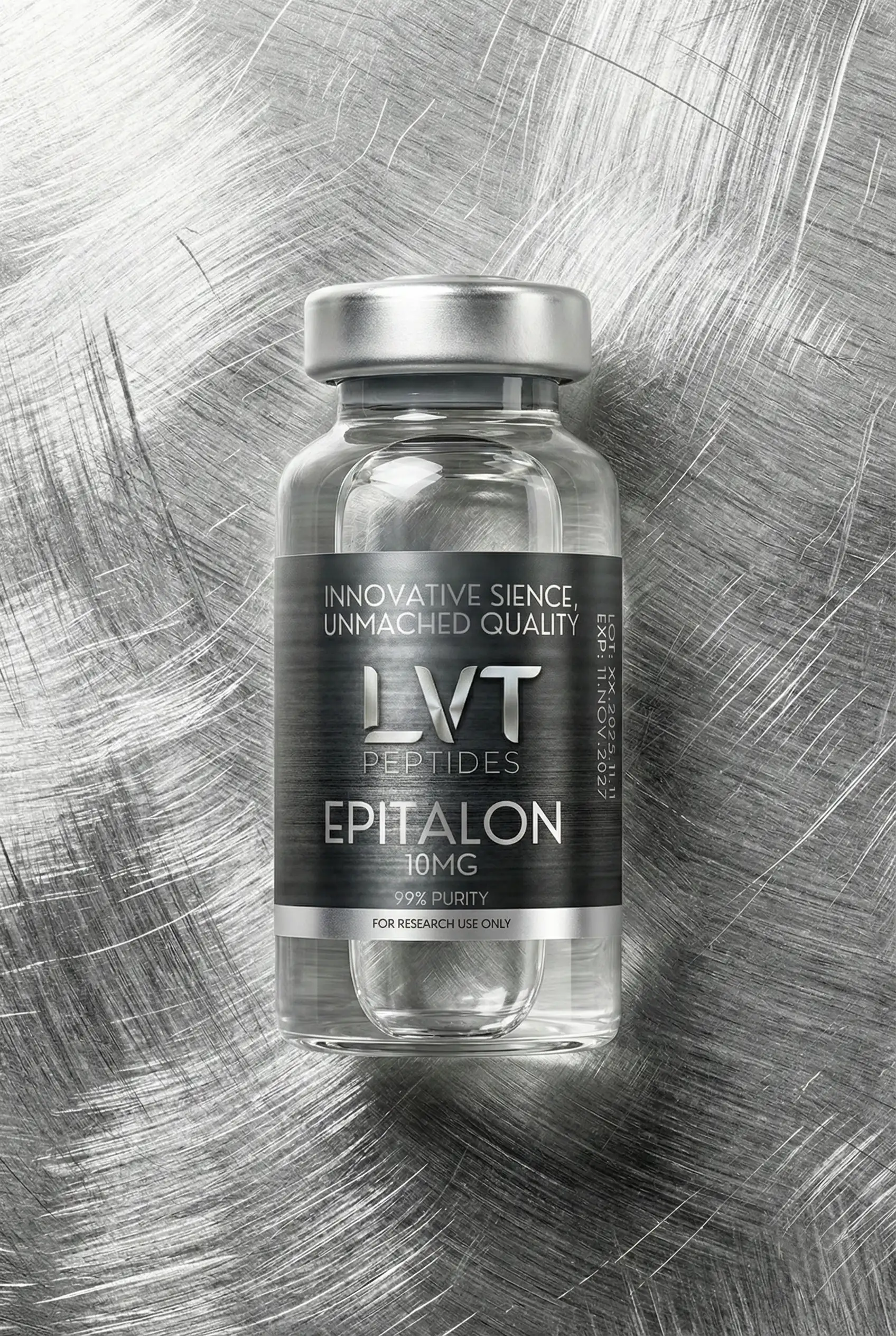
Epitalon – Telomerase Activation & Cellular Aging
Description
Epitalon is a synthetic tetrapeptide (Ala-Glu-Asp-Gly) derived from research on epithalamin, a pineal gland extract studied in aging biology. The peptide has been investigated for its potential ability to activate telomerase, the enzyme responsible for maintaining telomere length. Telomeres are protective caps at the ends of chromosomes that shorten during cellular replication. In preclinical and regional human studies, Epitalon has been examined for its influence on telomere dynamics, pineal function, and age-associated cellular markers. Research domains include cellular senescence, circadian regulation, and longevity-focused molecular investigations.
Mechanism of Action
Epithalon is studied for its potential to activate telomerase, an enzyme that helps maintain telomere length in dividing cells. By influencing telomere biology, it is explored in research focused on cellular aging and genomic stability.
Benefits
Investigated for telomerase activation and telomere maintenance
Telomeres shorten progressively with each cell division, eventually contributing to replicative senescence. Epithalon has been studied for its potential to increase telomerase activity, the enzyme responsible for extending telomeric DNA sequences. In laboratory models, activation of telomerase is associated with delayed cellular aging markers. By influencing this enzymatic pathway, Epithalon is positioned within telomere biology research.
Supports genomic stability research
Telomere shortening can lead to chromosomal instability and altered gene expression. Maintaining telomere length is associated with preservation of genomic integrity in experimental systems. Epithalon is explored for its influence on chromosomal end protection mechanisms, contributing to investigation of cellular stability pathways.
Engages cellular senescence pathways
Cellular senescence is characterized by growth arrest and altered gene expression. Telomerase modulation may influence the timing of senescence onset in dividing cells. Epithalon is studied within models examining how telomere dynamics interact with aging-associated signaling networks.
Influences pineal gland and circadian regulation research
Epithalon originates from research on epithalamin, associated with pineal gland activity. The pineal gland regulates melatonin secretion and circadian rhythms. Modulation of pineal-related signaling pathways connects Epithalon to neuroendocrine aging research domains.
Examined in oxidative stress response models
Oxidative stress contributes to telomere shortening and cellular damage. Experimental systems investigating Epithalon often evaluate oxidative stress markers alongside telomere dynamics. This positions the peptide within broader cellular resilience research frameworks.
Studied in replicative lifespan models
By influencing telomerase activity, Epithalon has been examined in cellular models assessing replicative potential. Increased replicative capacity is linked to extended cellular lifespan in controlled laboratory conditions. These findings support its inclusion in experimental longevity research discussions.
Targets aging biology at the chromosomal level
Unlike hormonal peptides that act on membrane receptors, Epithalon operates at the genomic regulation level. Its focus on telomere biology differentiates it from endocrine modulators. This molecular positioning places it within high-level aging research rather than metabolic or anabolic categories.
Supports integrated longevity pathway investigation
Aging is influenced by interconnected processes including telomere shortening, oxidative stress, and circadian disruption. Epithalon is studied as a multi-pathway modulator within this framework. Its role in telomere and pineal research integrates genomic and neuroendocrine perspectives in experimental aging models.
Peptide Interactions (Stack Suggestions)
| Peptide | Interaction | Description |
|---|---|---|
| Melatonin | Synergistic | Both work through pineal pathways – Epitalon increases endogenous melatonin production, creating complementary circadian and anti-aging effects |
| Thymalin | Synergistic | Combined use in Russian protocols shows enhanced immunomodulation and geroprotective effects through complementary mechanisms |
| NAD+ Precursors | Compatible | No direct interaction – work through different anti-aging pathways (telomerase vs NAD+ metabolism) |
| Growth Hormone Peptides | Compatible | No known interactions – Epitalon works through telomerase/pineal pathways while GH peptides use pituitary axis |
| BPC-157 | Compatible | Different mechanisms – can be used together safely for comprehensive regenerative support |
| Cortexin | Monitor Combination | Both have neuroprotective effects – monitor for enhanced cognitive effects and adjust dosing if needed |
| Semax/Selank | Compatible | No direct interactions – Epitalon focuses on cellular aging while these target neurocognitive function |
| Cancer Therapeutics | Unknown | Telomerase activation in cancer context requires careful consideration – consult oncologist before use |
Dosing & Reconstitution Guide
| Parameter | Details (Epitalon 10mg) |
|---|---|
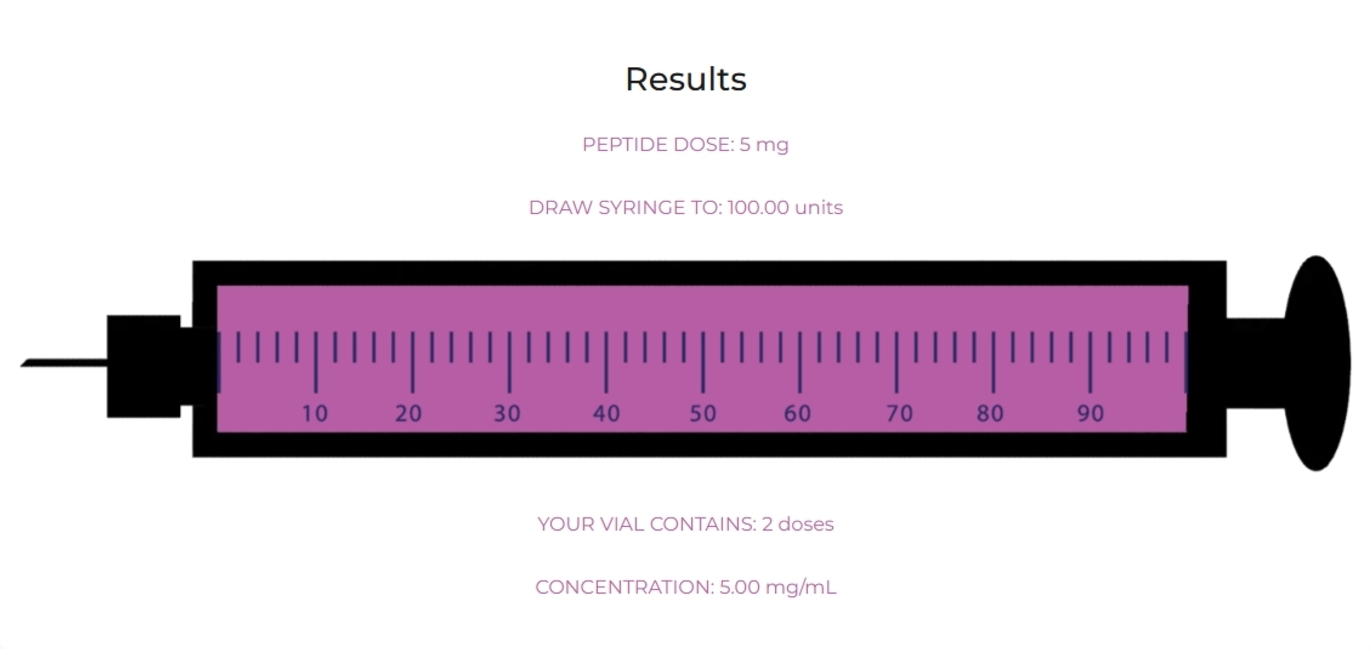
| Volume | Add 2.0 mL bacteriostatic water |
| Concentration | 5 mg/mL |
| Dose | 5 mg once daily |
| Cycle Length | 20 consecutive days |
Dosage & Protocols Variations
Standard Protocol (2 mL = 5 mg/mL)
| Phase | Daily Dose (mcg) | Units (per injection) (mL) |
|---|---|---|
| Days 1–20 (Cycle On) | 5,000 mcg (5 mg) | 100 units (1.00 mL) |
| Weeks 4–26 (Cycle Off) | 0 mcg | — |
Suggested daily approach based on published research protocols:
Standard Dose: 5,000 mcg (5 mg) once daily subcutaneously.
Frequency: Once per day (subcutaneous), preferably at bedtime.
Cycle Length: 20 consecutive days on, then 4–6 months off.
Timing: Evening administration recommended; rotate injection sites daily.
Storage Instructions
Proper storage preserves peptide quality and stability.
- Lyophilized: Store at −20 °C in dry, dark conditions; minimize moisture exposure.
- Reconstituted: Refrigerate at 2–8 °C; use within 4–6 weeks; avoid freeze–thaw.
- Allow vials to reach room temperature before opening to reduce condensation uptake.